ChatGPT Search transformed OpenAI’s chatbot from a text generator into a live answer engine that browses the web, retrieves current pages, and attaches linked citations to its responses. For the hundreds of millions of people who open ChatGPT before they open Google, the citation panel is the new search results page. Understanding how those citations are selected — and how to earn one — is now a core discipline within AI search optimization.
This guide breaks down how ChatGPT Search retrieves and cites sources, why conversational queries behave differently from keyword searches, and the concrete, testable steps that make your content citable, crawlable, and measurable in 2026.
How ChatGPT Search Retrieves and Cites Sources
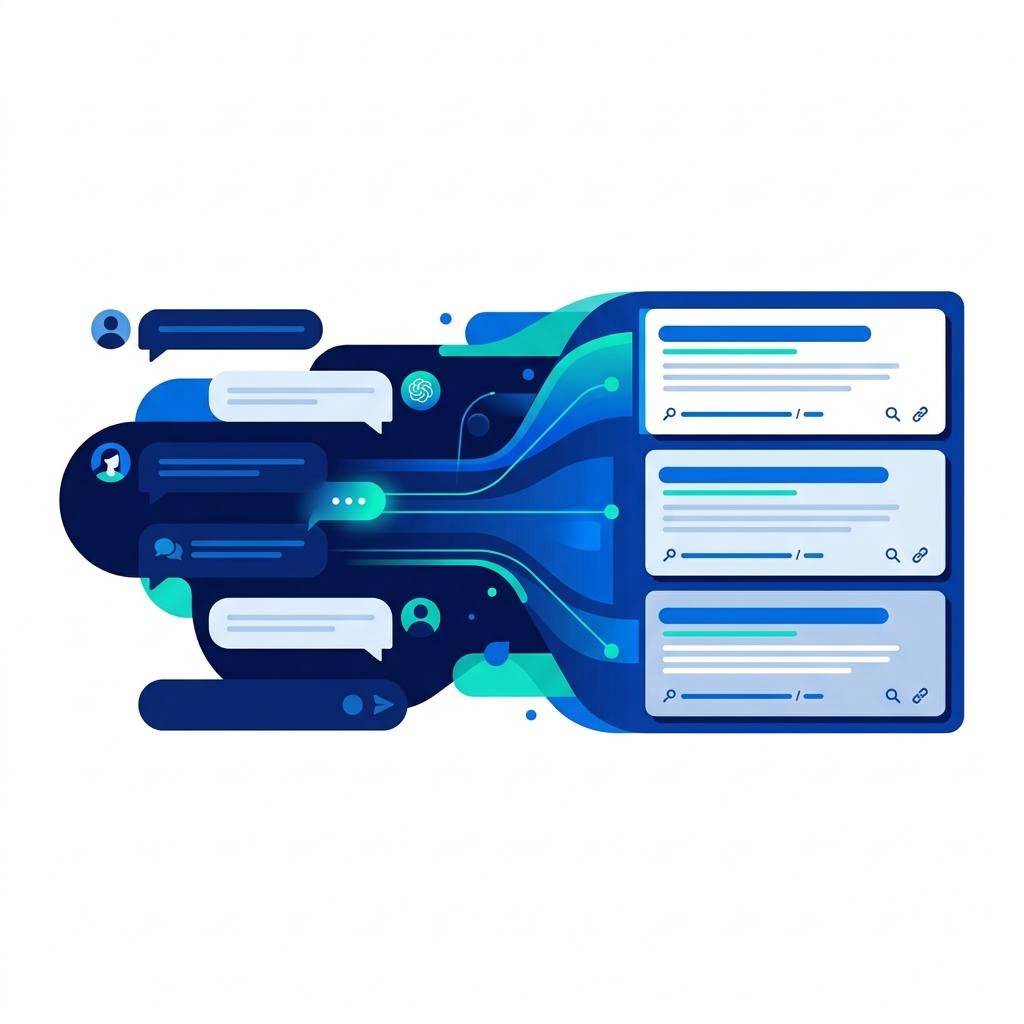
ChatGPT Search runs a retrieval-augmented generation pipeline. When your question needs fresh or factual information, the model decides to search rather than answer from memory. It reformulates your prompt into one or more web queries, fetches candidate pages from a search index, reads the most relevant passages, and then writes an answer that links to the specific sources each claim came from. The linked citations are not decoration — they are the grounding that keeps the answer accurate.
The index behind that retrieval has historically leaned on Microsoft Bing, blended with OpenAI’s own crawling through the OAI-SearchBot user agent. That Bing tie has two practical consequences. First, a healthy Bing presence — clean indexing, sensible titles, and Bing Webmaster Tools coverage — improves your odds of being retrieved. Second, because OpenAI layers its own retrieval and ranking logic on top, a strong Bing position is helpful but never sufficient on its own.
Why Conversational Queries Change the Game
A Google search is usually two or three keywords. A ChatGPT query is a sentence — often a paragraph — with context, constraints, and a clear goal. Someone does not type "crm software"; they ask, "which CRM works best for a five-person Ottawa marketing agency that already uses Google Workspace and needs bilingual support?" That shift changes both what people ask and how you should write.
- Length and specificity: Conversational prompts pack multiple constraints into one query, so pages that address several attributes at once are retrieved more often.
- Follow-up context: Users refine within a thread ("now compare the top two on price"), which means the answer engine keeps searching. Content that anticipates the next question wins the follow-up.
- Intent is explicit: People state their situation directly, so entity-rich content — naming tools, places, and audiences — matches better than generic copy.
- Zero-click by default: The answer often satisfies the user inside the chat, so a citation may deliver brand visibility rather than a click.
The practical takeaway is to write for questions, not keywords. This is the same principle that governs content marketing for search: map the real questions your audience asks, then answer them completely and specifically enough that a model can reuse your passage verbatim.
Becoming Citable: Structure, Freshness, and Authority
Three forces decide whether ChatGPT Search reaches for your page: structure that is easy to extract, freshness that signals the information is current, and authority that tells the model your claims can be trusted. Get all three right and you become a repeatable source.
Structure content for extraction
Lead every section with a complete, standalone answer, then elaborate. A model retrieving a single chunk should get the full point without the surrounding paragraphs. Tables, numbered steps, definitions, and FAQ blocks map cleanly to the formats ChatGPT generates, which makes them disproportionately likely to be quoted. Clean semantic HTML and valid structured data reinforce which entity each passage is about.
Signal freshness
Answer engines strongly favor recent pages for anything time-sensitive. Publish and, more importantly, genuinely update your content — add a visible last-updated date, refresh statistics with the current year, and revise claims that have aged. A page that says "as of 2026" with corroborating detail reads as more trustworthy to a retrieval system than an undated evergreen post.
Build entity authority
Models corroborate claims across sources before citing. If several reputable sites agree with you, and your brand is consistently described the same way across the web, you become the safe choice to cite. Consistent author bios, an established organization entity, and corroboration from other domains all raise your citation odds. This is the citation-first side of the same work covered in our guide to AI search brand mentions.
- ChatGPT Search retrieves passages, so make each section a standalone answer.
- A strong Bing presence helps, but retrieval relevance and clarity matter more.
- Freshness signals — real updates and visible dates — lift time-sensitive citations.
- Corroboration across sources and consistent entities build citation trust.
- Write for full conversational questions, not two-word keywords.

Crawler Control: OAI-SearchBot, GPTBot, and Robots
You cannot be cited by a bot you have blocked. OpenAI operates several distinct crawlers, and conflating them is the most common and costly mistake site owners make. Each has a different purpose, and you can allow or disallow them independently in robots.txt.
| User Agent | Purpose | Block it if... |
|---|---|---|
| OAI-SearchBot | Indexes pages so they can appear and be cited in ChatGPT Search | You do not want to appear in ChatGPT Search results at all |
| GPTBot | Crawls content to train OpenAI’s foundation models | You want to opt out of model training but keep search visibility |
| ChatGPT-User | Fetches a page live when a user or plugin requests it in a session | You want to block on-demand user-triggered fetches |
User-agent: OAI-SearchBot
Allow: /

User-agent: ChatGPT-User
Allow: /

# Opt out of model training only
User-agent: GPTBot
Disallow: /
Beyond robots.txt, the emerging llms.txt convention lets you point AI systems to your most important, machine-readable content. It is not yet a ranking factor, but it is low-effort insurance — our llms.txt and AI crawlers guide walks through implementation and the wider crawler landscape.
Measuring AI Referral Traffic
Measurement is where most teams stall, because AI answers are consumed without a click far more often than traditional results. Still, real signals exist, and combining them gives you a defensible picture of ChatGPT-driven visibility.
- Referral source: In GA4 or your analytics tool, filter referral traffic for chatgpt.com. Sessions that arrive from a citation click land here and are your cleanest hard number.
- Landing-page patterns: ChatGPT referrals often cluster on specific answer-friendly pages. Watch which URLs earn AI referrals to learn what the engine rewards.
- Citation monitoring: Tools such as Profound, Otterly.ai, and Peec track how often your brand is named or linked inside AI answers for target prompts — the impression that never becomes a click.
- Assisted conversions: Users often discover you in ChatGPT, then search your brand directly. A rise in branded search that correlates with AI visibility is a real, if indirect, signal.
For teams that want a done-for-you measurement framework and hands-on citation strategy, the professional services team at OttawaSEO.com works directly with businesses to build and track AI-visibility programs.
ChatGPT vs. Perplexity vs. Google AI Overviews
The three most influential answer surfaces retrieve and cite differently, and understanding the contrast helps you prioritize. Each rewards the same fundamentals — crawlability, clarity, authority — but weights them and surfaces citations in its own way.
| Feature | ChatGPT Search | Perplexity | Google AI Overviews |
|---|---|---|---|
| Primary index | Bing-based blend plus OAI-SearchBot | Own index plus Bing and PerplexityBot | Google’s own index |
| Citation style | Inline links and a source list | Numbered footnotes on most sentences | Linked cards within the overview |
| Query style | Conversational, multi-turn | Conversational, research-oriented | Traditional queries, expanded by AI |
| Best entry point | Bing indexing plus answer-first content | Passage-level clarity and freshness | Strong existing Google rankings |
Perplexity is the most transparent laboratory because it footnotes nearly every sentence — our dedicated guide on getting cited by Perplexity is the best place to reverse-engineer citation logic. Google AI Overviews, by contrast, still leans heavily on classic ranking signals, which is why traditional SEO and AI Overviews visibility reinforce each other. ChatGPT Search sits between the two: conversational like Perplexity, index-dependent like Google.
- Reaches a massive audience that starts tasks in ChatGPT rather than a search box.
- Citations can place your brand inside the answer, above any organic result.
- The content improvements also strengthen classic SEO and other AI engines.
- Citation share is harder to measure than keyword rankings.
- Retrieval and source-selection logic change without notice.
- A citation may deliver a brand impression without a click or session.
Preparing for Agentic Search
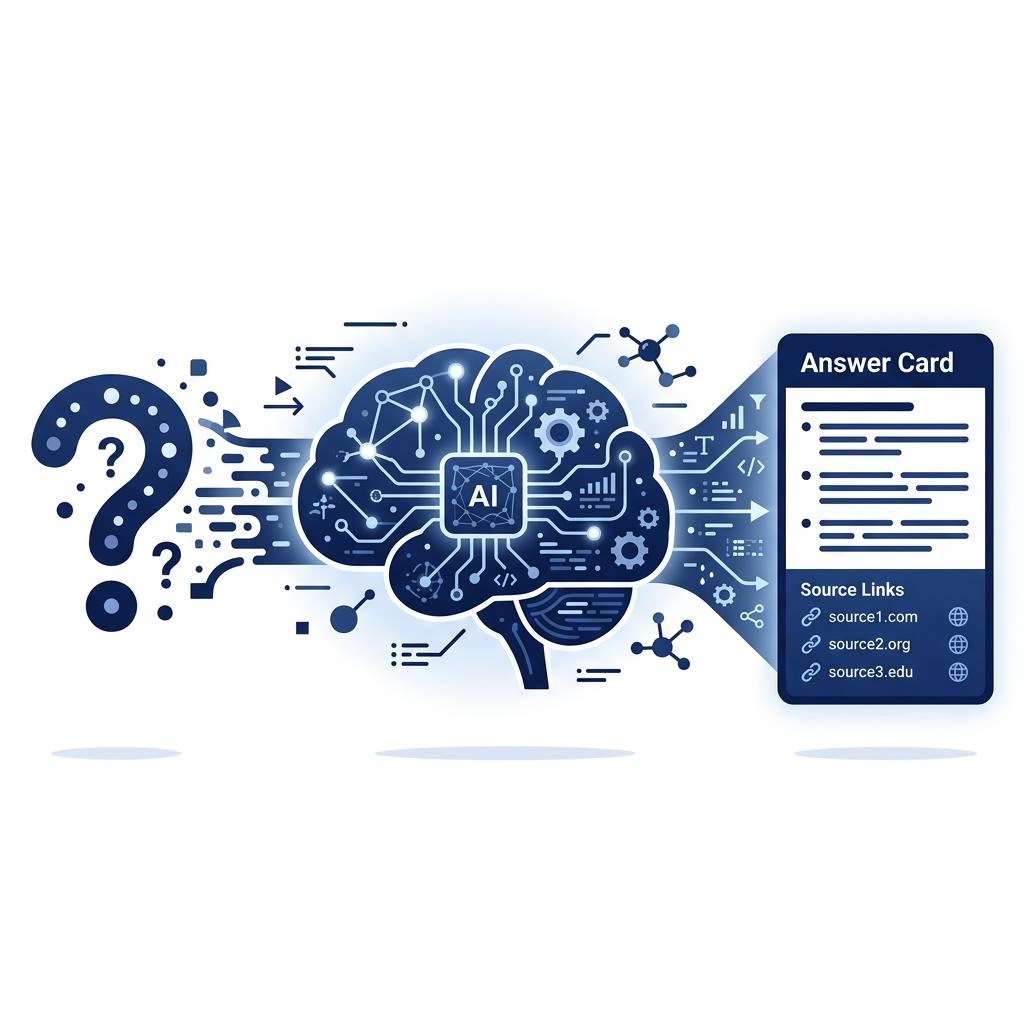
The next shift is already arriving: agentic search, where an AI assistant does not just answer but acts. Instead of returning a list of CRMs, an agent compares them against your stated constraints, checks live pricing, and drafts the sign-up. When software becomes the visitor, your site has to be legible to a machine that is trying to complete a task, not just read a page.
- Structured data everywhere: Product, pricing, availability, and organization schema let an agent read your offer without guessing.
- Machine-readable transactions: Clear, parseable pricing and stock or booking states matter more than persuasive marketing prose.
- Fast, reliable rendering: Agents abandon slow or JavaScript-heavy pages, so healthy Core Web Vitals and clean JavaScript rendering become table stakes.
- Consistent entities: An agent needs to confirm it is acting on the right business, so uniform names, addresses, and identifiers reduce failure.
The reassuring truth is that preparing for agentic search is not a separate program. Structured data, fast pages, consistent entities, and answer-first content are the same investments that earn citations today — they simply pay off again when the reader becomes an agent.
Does ChatGPT Search use Google or Bing rankings?
Neither directly. ChatGPT Search retrieves from a search index that has historically leaned on Microsoft Bing, blended with OpenAI’s own crawling via OAI-SearchBot. A strong Bing presence helps, but retrieval relevance and passage clarity matter more than any single ranking position.
How do I let ChatGPT Search crawl my site without training its models?
Allow OAI-SearchBot in robots.txt so you remain eligible for citation, and separately decide whether to allow GPTBot, which OpenAI uses for model training. They are distinct user agents, so you can permit search retrieval while disallowing training if you prefer.
How can I tell if ChatGPT is sending me traffic?
Look for referrals from chatgpt.com in your analytics referral report and filter for that source. Because many AI answers are consumed without a click, pair referral data with brand-monitoring tools that track how often you are named or linked inside the answers themselves.
Is optimizing for ChatGPT Search different from traditional SEO?
The foundations overlap heavily: crawlability, authority, and clear content all matter. The difference is emphasis. Answer engines reward passage-level clarity, freshness, factual specificity, and entity consistency more aggressively than a classic ten-blue-links results page does.
Should I write differently for conversational queries?
Yes. Conversational and follow-up queries are longer, more specific, and context-dependent. Lead each section with a complete, standalone answer, cover natural follow-up questions on the same page, and avoid burying the point beneath preamble.
What is agentic search and how do I prepare for it?
Agentic search is when an AI assistant completes multi-step tasks on your behalf — comparing options, filling forms, or booking. Prepare with structured data, machine-readable pricing and availability, fast reliable pages, and clean semantic HTML that an agent can parse and act on.
- ChatGPT Search grounds answers in retrieved passages with linked citations.
- Allow OAI-SearchBot to stay citable; block GPTBot only to opt out of training.
- Write full standalone answers for conversational, multi-constraint queries.
- Measure with chatgpt.com referrals plus citation-monitoring tools.
- The structured, fast, entity-consistent site that gets cited is also ready for agentic search.